Inflatable paddle boards for beginners: width, then volume
Standing up on a board for the first time is a stability problem, and stability is two published numbers.
By Scooter M. · Published September 2, 2026 · Last updated September 2, 2026
DisclosureSome links on this page are Amazon Associates links. If you buy through one we earn a commission at no extra cost to you. It does not change what we recommend or the order we recommend it in -- here is how we rank, and here is how the site is funded.
Learning to paddle board is mostly a balance problem, and how hard that problem is depends on two published numbers: how wide the board is and how much water it displaces. Everything else on the spec sheet matters later.
The short version
Width first: 32 inches is the practical floor for a first board, 33 is better.
Volume second: aim for well above your body weight in liters so the board sits high.
The registry's widest and highest-volume board is also its heaviest. For a first board that is the right way round.
Retrospec publishes a 12 to 15 psi range. Starting at 12 is less pumping and a slightly more forgiving board.
Working pressure ranges are the manufacturers' own. Where a range is published, the lower end is a legitimate option and a noticeably shorter pumping job.
Why length is not a beginner spec
Longer boards track straighter, and tracking is a thing you appreciate on your fifth outing rather than your first. On the first outing you want the board to stay flat under you, and that is width and volume.
The Atoll 11' is on this list because eleven feet of waterline stops being irrelevant quickly, and 238 L with a 315 lb limit is still forgiving enough to learn on. It is the board to buy if you already suspect you are going to keep doing this.
The Compact is here as a warning
It is a genuinely excellent product and it is the wrong first board. Nine foot six with 200 L and a 210 lb rider limit means a 180 lb paddler is at 86 percent of its rating before they pick up a paddle, and a short low-volume board is lively in a way that makes the first hour harder than it needs to be.
The thing nobody mentions: pumping is part of the purchase
Our arithmetic puts the NIXY Newport G5 at roughly 190 strokes on a 2 L dual-action hand pump to reach 15 psi. That is around five minutes of steady work before you get in the water, every single time.
It is not a reason to buy a smaller board -- volume is what makes a first board forgiving, and it is worth the effort. It is a reason to know the number in advance, and a reason a lot of people end up buying an electric pump in their first season.
Best to grow intoAtoll 11'Atoll publishes no packed dimensions, so the one thing a travel buyer needs to know about an 11 ft board -- how big the roll is -- is not on the page..
#ad Buy links are tagged Amazon Associates links. We earn a commission at no cost to you and it never changes the order.
The picks in full
No photoWe have no photograph of this exact model that we can honestly publish
#1 · Best first board
NIXY Newport G5
Three hundred liters at 15 psi and 21 lb of board. The most volume of anything here, which makes it the most stable and, not coincidentally, the longest to pump.
Thirty-three inches wide and 300 L of volume -- the widest and highest-volume board in the registry, which is exactly what a first-timer wants underfoot. It is the most pumping of any board here, and for a first board that is the right trade.
The trade-off
That 300 L is the reason it floats anybody and the reason it is the hardest hand-pump job in this registry. Buy it with an electric pump or plan for the arithmetic.
#ad We earn a commission if you buy through this link, at no extra cost to you. It never changes the ranking. How this site is funded. Prices checked September 2, 2026.
NIXY Newport G5 published specifications
Weight (hull or board)
21 lb
Weight (full system)
Not published
Packed size
Not published
Packed linear inches
Not published
Inflated
10 ft 6 in x 33 in
Capacity
300 lb
Working pressure
15 psi
Floor pressure
Not published
Volume
300 L
Material
Dual-layer FusionTech laminated woven drop-stitch
Chambers
1
Valves
Not published
Warranty
3 years
Computed · pump load
About 192 strokes on a 2 L dual-action hand pump to reach 15 psi, roughly 4.8 minutes at a steady 40 strokes a minute.
300 L needs 606 L of free air: 111 double-action strokes to 7 psi, then 82 single-action. Method.
No photoWe have no photograph of this exact model that we can honestly publish
#2 · Best for a heavier paddler
Bluefin Cruise 10'8
Two hundred and sixty liters, a 330 lb rider limit and a five-year warranty -- the longest warranty term published by anyone in this registry.
A 330 lb rider limit on 260 L, plus a five-year warranty -- the longest term published by anyone here. If you are at the upper end of the weight range, this is the board that does not make you think about it.
The trade-off
Bluefin quotes a recommended 15 to 18 psi and a 28 psi test pressure. The higher you go the stiffer it gets and the longer the pumping takes; the top of that range is a lot of strokes.
#ad We earn a commission if you buy through this link, at no extra cost to you. It never changes the ranking. How this site is funded. Prices checked September 2, 2026.
Bluefin Cruise 10'8 published specifications
Weight (hull or board)
20 lb
Weight (full system)
Not published
Packed size
Not published
Packed linear inches
Not published
Inflated
10 ft 8 in x 32 in
Capacity
330 lb
Working pressure
15 psi
Floor pressure
Not published
Volume
260 L
Material
ESL drop-stitch
Chambers
1
Valves
Not published
Warranty
5 years
Computed · pump load
About 167 strokes on a 2 L dual-action hand pump to reach 15 psi, roughly 4.2 minutes at a steady 40 strokes a minute.
260 L needs 525 L of free air: 96 double-action strokes to 7 psi, then 71 single-action. Method.
No photoWe have no photograph of this exact model that we can honestly publish
#3 · Best to grow into
Atoll 11'
Eleven feet of board at 21 lb and 238 L. The longest board here carrying the second-lowest volume, which is what a narrow, efficient hull shape looks like on a spec sheet.
Eleven feet tracks noticeably straighter than a 10'6, which stops being irrelevant about three outings in. A 315 lb limit on 238 L means it stays stable while you learn.
The trade-off
Atoll publishes no packed dimensions, so the one thing a travel buyer needs to know about an 11 ft board -- how big the roll is -- is not on the page.
#ad We earn a commission if you buy through this link, at no extra cost to you. It never changes the ranking. How this site is funded. Prices checked September 2, 2026.
Atoll 11' published specifications
Weight (hull or board)
21 lb
Weight (full system)
Not published
Packed size
Not published
Packed linear inches
Not published
Inflated
11 ft x 32 in
Capacity
315 lb
Working pressure
15 psi
Floor pressure
Not published
Volume
238 L
Material
MSL Fusion machine-laminated dual-layer PVC over warp-knit drop-stitch
Chambers
1
Valves
Not published
Warranty
Not published
Computed · pump load
About 153 strokes on a 2 L dual-action hand pump to reach 15 psi, roughly 3.8 minutes at a steady 40 strokes a minute.
238 L needs 481 L of free air: 88 double-action strokes to 7 psi, then 65 single-action. Method.
No photoWe have no photograph of this exact model that we can honestly publish
#4 · Best budget first board
Retrospec Weekender 10'6
Seventeen and a half pounds, a 12 to 15 psi working range and a 275 lb rider limit, at the price end of the category where most brands publish almost nothing.
Thirty-two inches wide, 275 lb limit and a published 12 to 15 psi range. Starting at 12 psi is materially less pumping while you find out whether you like this, and few budget brands tell you that is an option.
The trade-off
Retrospec publishes no board volume, so the inflation question cannot be answered for it. On a board sold on how easy it is to get going, that is a strange omission.
#ad We earn a commission if you buy through this link, at no extra cost to you. It never changes the ranking. How this site is funded. Prices checked September 2, 2026.
No photoWe have no photograph of this exact model that we can honestly publish
#5 · Skip this one as a first board
Red Paddle Co Compact 9'6
The only board here whose complete system -- board, pump, paddle, fins, leash, bag -- clears both airline limits at once on published numbers: 58.7 linear inches and 28 lb.
Nine foot six, 200 L and a 210 lb rider limit. It is the best traveling board here and the least forgiving one to learn on -- short and low-volume is lively underfoot, which is the opposite of what a first hour needs.
The trade-off
Two hundred liters of volume and a 210 lb rider limit. It packs small because it is small, and heavier paddlers will find it sits low.
#ad We earn a commission if you buy through this link, at no extra cost to you. It never changes the ranking. How this site is funded. Prices checked September 2, 2026.
Red Paddle Co Compact 9'6 published specifications
Weight (hull or board)
16 lb
Weight (full system)
28 lb
Packed size
26 x 17.32 x 15.35 in
Packed linear inches
58.7 in
Inflated
9 ft 6 in x 32 in
Capacity
210 lb
Working pressure
15 psi
Floor pressure
Not published
Volume
200 L
Material
MSL PACT laminated drop-stitch
Chambers
1
Valves
Not published
Warranty
Not published
Computed · airline check
58.7 linear inches and 28 lb. Clears the 62-inch and 50 lb economy checked-bag limits.
26 + 17.32 + 15.35 = 58.7 in
Computed · pump load
About 128 strokes on a 2 L dual-action hand pump to reach 15 psi, roughly 3.2 minutes at a steady 40 strokes a minute.
200 L needs 404 L of free air: 74 double-action strokes to 7 psi, then 54 single-action. Method.
Thirty-two inches is the practical floor and 33 is better. The NIXY Newport G5 at 33 inches is the widest board in this registry; the GILI Air at 31 is the narrowest, and that two-inch difference is genuinely noticeable when you first stand up. Width is the single most useful beginner spec on the sheet.
How much volume does a beginner need?+
Enough that the board sits high with you on it, which in practice means at least your body weight in liters plus a healthy margin. A 180 lb paddler on a 200 L board is close to the limit; the same paddler on a 300 L board has the board doing the work. This is why the highest-volume board here is the beginner pick despite being the heaviest.
Does a beginner need to inflate to the full 15 psi?+
Not always, and it is worth knowing. Retrospec publishes a 12 to 15 psi range for the Weekender, and 12 psi is meaningfully less pumping. A softer board is a little slower and a little more forgiving, which is a reasonable trade while you are learning. Never exceed the maximum the manufacturer states.
Should a beginner start kneeling?+
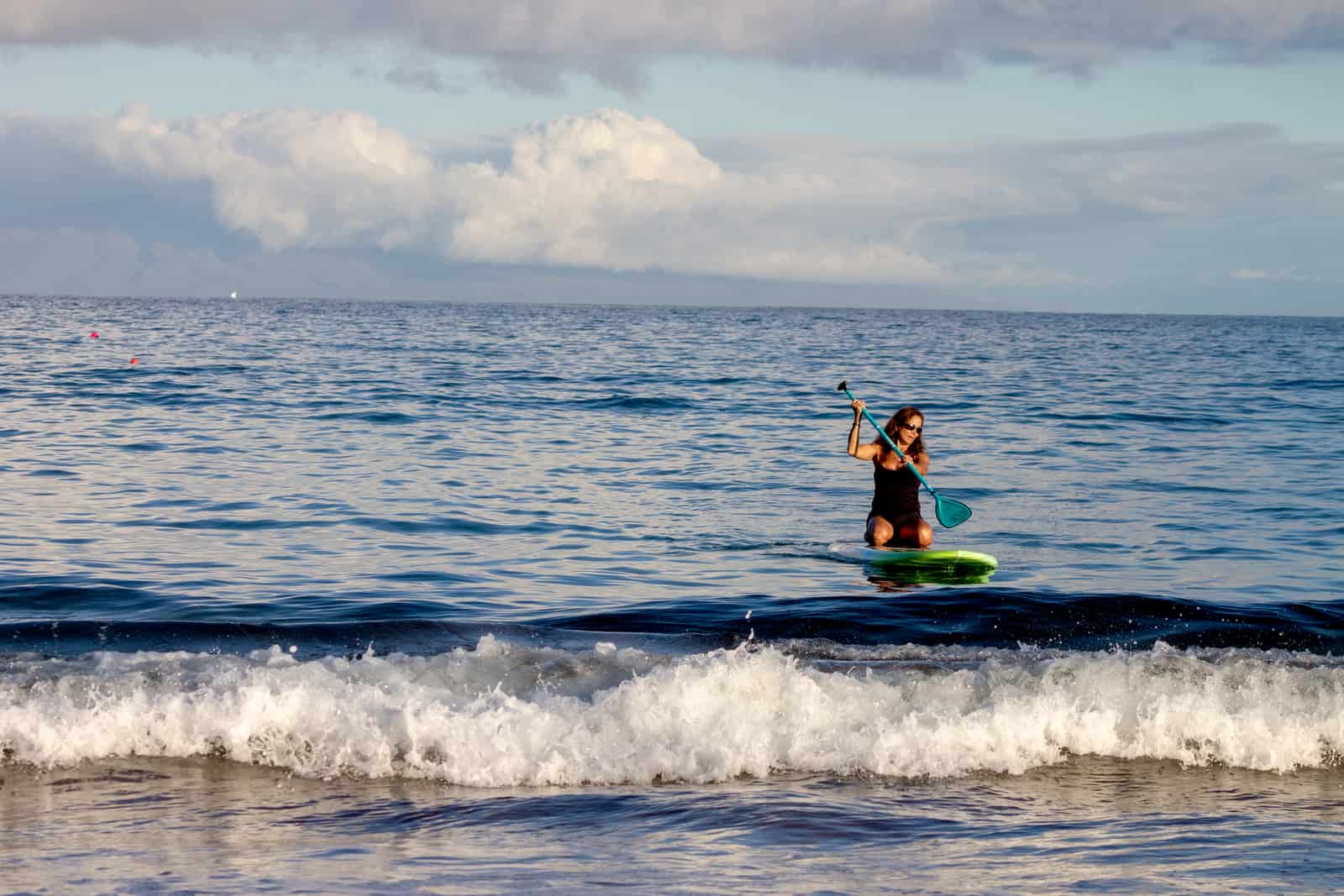
It is what most instruction suggests, and the specs support why: kneeling puts your weight lower and over a wider footprint, so the width and volume of the board matter less. It is also how you get back on after falling off, which you will.
Units we claim to have tested: 0
Everyone in this category says they tested twenty boats. We have not tested any, and we say so. What we did instead: pulled the published specifications and the owner's manuals, computed the pump load and the packed volume for every model that publishes enough to compute them, checked the packed sizes against the airline limits you will actually meet, and cited every page we read. The full method.
Sources
Every specification on this page was read from one of these, on the date shown. Specs change between model years, so the date matters as much as the link.