Skip to content
Stroke & Stern

Inflatable or hardshell kayak: the actual trade

One of these fits in a cupboard. The other is faster and ready the moment you reach the water. Almost everything else follows from that.

By Scooter M. · Published September 2, 2026 · Last updated September 2, 2026

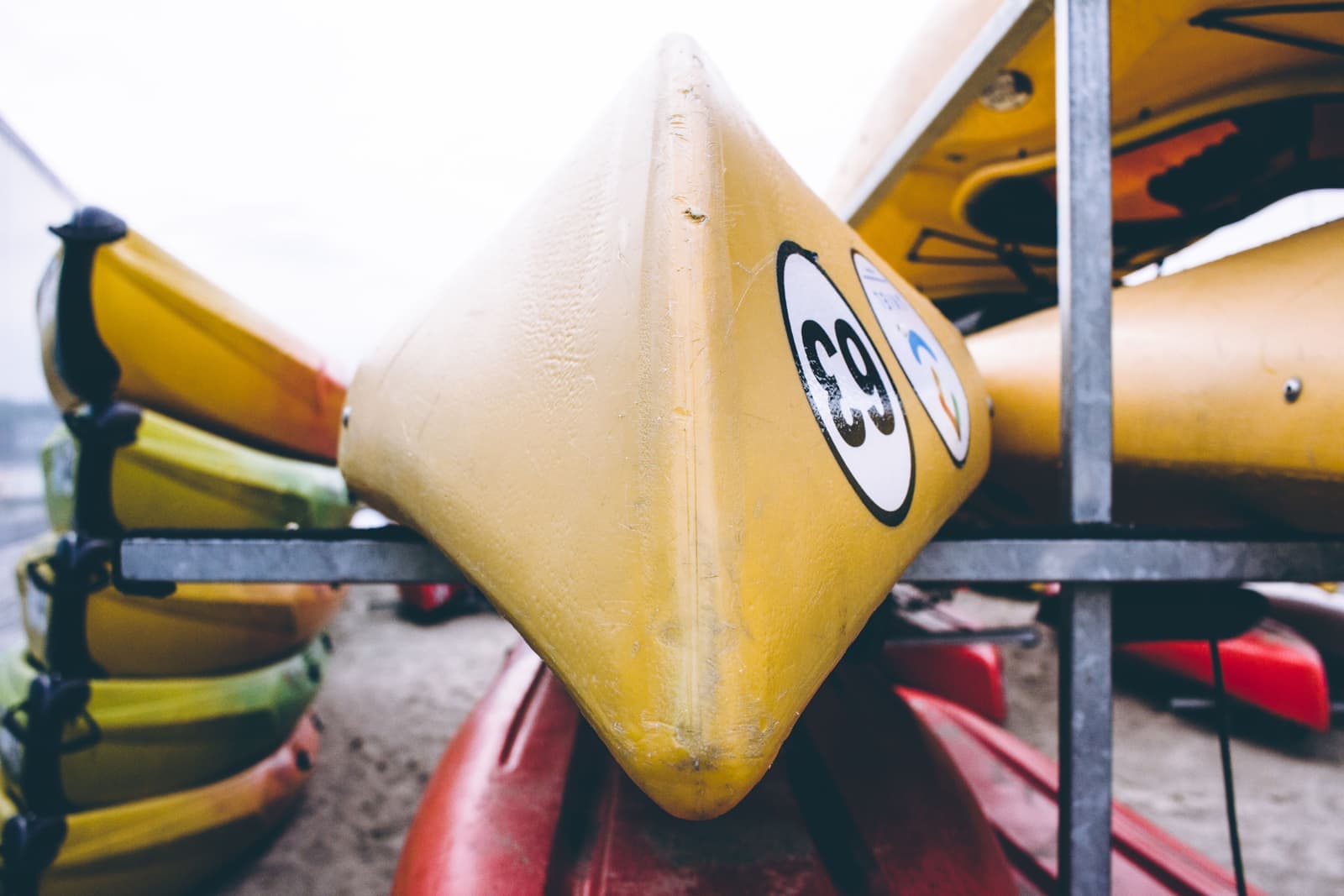
A rigid kayak strapped to a metal roof rack
Disclosure Some links on this page are Amazon Associates links. If you buy through one we earn a commission at no extra cost to you. It does not change what we recommend or the order we recommend it in -- here is how we rank, and here is how the site is funded.

This is a storage decision that people argue about as if it were a performance decision. If you have a garage, a roof rack and somewhere to put a 12-foot boat, a hardshell is faster, stiffer and ready the moment you arrive. Most of the people asking this question have none of those things.

The short version
  • A hardshell is faster on the water and needs a garage, a rack and a car that can carry it.
  • An inflatable fits in a cupboard, checks as luggage, and costs you 8 to 15 minutes at each end.
  • The performance gap narrows with structure -- aluminum ribs, drop-stitch floors -- and it does not close.
  • The maintenance cost nobody mentions: an inflatable needs somewhere to dry out fully before it goes away.

The comparison, dimension by dimension

Inflatable against hardshell kayak on the dimensions that differ
InflatableHardshell
StorageCupboard or car bootGarage, yard or rack
TransportChecked bag or back seatRoof rack or trailer
Setup at the water8 to 15 min pumpingLift it off the rack
Weight (our registry)4 to 48 lbTypically 40 to 80 lb
Speed and trackingSofter, wanders moreSharper entry, fixed keel
Field repairPatch kit, at the waterNot practically repairable
After each useMust dry fully before packingRinse and rack it
Inflatable figures are from the eight boats in our registry. The hardshell weight range is a general characterization of the recreational category rather than a measured figure -- we hold no published hardshell specifications and are not going to invent any.

Where the gap is real

A rigid kayak holds its shape because it is a shape. An inflatable holds its shape because air is pushing outward on fabric, and at the pressures these boats run -- 1.1 psi on the Sea Eagle SE370, 2 psi on the Advanced Elements boats -- that is not much push. The hull flexes as you put power into a stroke, and that flex is energy that does not become forward motion.

The two boats that most narrow the gap do it in opposite ways. The AdvancedFrame adds aluminum ribs at bow and stern to create a defined entry and a keel line. The Chelan 120 leaves the tubes soft and puts a 6 psi drop-stitch floor underneath, which is firm to sit on and gives the hull a flat plane to run on. Both add weight -- 36 lb and 28.3 lb against the PackLite's 4 -- which is the trade laid out in full here.

Where the inflatable wins outright

The Sea Eagle SE370 carries 650 lb, is 12 ft 6 in long, weighs 32 lb, and packs to 58 linear inches. There is no rigid tandem that does all four of those things, because there is no rigid tandem that packs at all.

That is the row that decides it for most people. If your boat has to live in a cupboard, travel in the back of a hatchback, or get on a plane, the comparison is over before the performance columns matter.

Who should buy which

Buy a hardshell if

You have somewhere to store it and a way to carry it, you paddle from the same launch most times, and you care about speed or want to cover distance. The five-minute setup advantage compounds every single outing.

Buy an inflatable if

You live somewhere without a garage, you want to fly or fit it in a normal car, you paddle in several different places, or you are not yet sure how often you will go. It is also the far lower-risk purchase for finding out whether you enjoy this at all.

Read next

Quick picks

Ranked on weight. Tap any row to jump to the full write-up.

#ProductBest forWeightPrice
1
No photo
Closest inflatable to a hardshellAdvanced Elements AdvancedFrameThirty-six pounds folded to 30 x 17 x 10 inches.
Tracking on open water36 lbCheck price on Amazon
2
No photo
Best hard floor in a soft boatAquaglide Chelan 120Aquaglide does not publish a packed size for this boat, so you cannot check it against an airline limit before you buy it -- and it is the one number a travel buyer needs most..
A stiff hull without the weight28.3 lbCheck price on Amazon
3
No photo
Where the inflatable wins outrightSea Eagle SE370Low pressure means a soft hull.
Two paddlers and a lot of gear32 lbCheck price on Amazon

#ad Buy links are tagged Amazon Associates links. We earn a commission at no cost to you and it never changes the order.

The picks in full

No photoWe have no photograph of this exact model that we can honestly publish
#1 · Closest inflatable to a hardshell

Advanced Elements AdvancedFrame

Aluminum ribs in the bow and stern give it a defined shape that round inflatable tubes cannot, and it tracks like it. You pay for that in 36 lb and a folded package the size of a large duffel.

Aluminum ribs in the bow and stern give it a defined entry and a real keel line, which is the specific thing soft inflatable tubes cannot do. If your objection to inflatables is that they wander, this is the one that answers it.

The trade-off

Thirty-six pounds folded to 30 x 17 x 10 inches. That is 57 linear inches -- inside the checked-bag line on size, but you are within 14 lb of the weight limit before you have added a pump or a paddle.

Check price on Amazon

#ad We earn a commission if you buy through this link, at no extra cost to you. It never changes the ranking. How this site is funded. Prices checked September 2, 2026.

Advanced Elements AdvancedFrame published specifications
Weight (hull or board)36 lb
Weight (full system)Not published
Packed size30 x 17 x 10 in
Packed linear inches57 in
Inflated10 ft 5 in x 32 in
Capacity300 lb
Working pressure2 psi
Floor pressure1 psi
VolumeNot published
MaterialPVC tarpaulin with aluminum bow and stern ribs
Chambers7
ValvesTwistlok and military-style, 1 psi floor pressure-release valve
WarrantyNot published
Computed · airline check

57 linear inches and 36 lb. Clears the 62-inch and 50 lb economy checked-bag limits.

30 + 17 + 10 = 57 in

We have not paddled this one. Specifications above are the manufacturer's own, read on September 2, 2026 from Advanced Elements AdvancedFrame AE1012 owner's manual and AdvancedFrame AE1012-R specifications, B&H. Full Advanced Elements AdvancedFrame write-up

No photoWe have no photograph of this exact model that we can honestly publish
#2 · Best hard floor in a soft boat

Aquaglide Chelan 120

A drop-stitch floor at 6 psi under 3 psi side tubes. That pressure difference is the whole design: a hard, flat floor to stand the boat up, soft tubes to keep the weight down.

A 6 psi drop-stitch floor under 3 psi tubes gets much of a rigid hull's firmness underfoot at 28.3 lb. It is the design that most narrows the gap without adding a frame.

The trade-off

Aquaglide does not publish a packed size for this boat, so you cannot check it against an airline limit before you buy it -- and it is the one number a travel buyer needs most.

Check price on Amazon

#ad We earn a commission if you buy through this link, at no extra cost to you. It never changes the ranking. How this site is funded. Prices checked September 2, 2026.

Aquaglide Chelan 120 published specifications
Weight (hull or board)28.3 lb
Weight (full system)Not published
Packed sizeNot published
Packed linear inchesNot published
Inflated11 ft 3 in x 32.5 in
Capacity300 lb
Working pressure3 psi
Floor pressure6 psi
VolumeNot published
MaterialDuratex tubes with a drop-stitch floor
ChambersNot published
ValvesHalkey-Roberts
WarrantyNot published

We have not paddled this one. Specifications above are the manufacturer's own, read on September 2, 2026 from Aquaglide Chelan 120 specifications, Campmor and Aquaglide Chelan 120 listing, Amazon. Full Aquaglide Chelan 120 write-up

No photoWe have no photograph of this exact model that we can honestly publish
#3 · Where the inflatable wins outright

Sea Eagle SE370

Twelve and a half feet of boat, 650 lb of capacity, 32 lb of hull, and it runs at 1.1 psi -- the lowest working pressure of anything here, which is why it is also one of the quickest to pump.

Six hundred and fifty pounds of capacity from a 58-linear-inch bag and 32 lb of hull. No rigid tandem within a hundred pounds of that weight packs into anything you could carry, and that is the whole argument in one row.

The trade-off

Low pressure means a soft hull. It is forgiving and it is slow. The packed bag is 31 x 19 x 8 inches -- 58 linear inches, so it checks, but it is a bulky thing to carry through an airport.

Check price on Amazon

#ad We earn a commission if you buy through this link, at no extra cost to you. It never changes the ranking. How this site is funded. Prices checked September 2, 2026.

Sea Eagle SE370 published specifications
Weight (hull or board)32 lb
Weight (full system)Not published
Packed size31 x 19 x 8 in
Packed linear inches58 in
Inflated12 ft 6 in x 2 ft 10 in
Capacity650 lb
Working pressure1.1 psi
Floor pressureNot published
VolumeNot published
Material38 mil Polykrylar (K80 PVC)
Chambers3
ValvesFive one-way air valves
WarrantyNot published
Computed · airline check

58 linear inches and 32 lb. Clears the 62-inch and 50 lb economy checked-bag limits.

31 + 19 + 8 = 58 in

We have not paddled this one. Specifications above are the manufacturer's own, read on September 2, 2026 from Sea Eagle SE370 specifications and Sea Eagle SE370 Pro package listing, Amazon. Full Sea Eagle SE370 write-up

Questions people actually ask

Are inflatable kayaks slower than hardshells?
Generally yes, and the reason is hull shape rather than the fact of being inflatable. A rigid kayak has a sharp entry and a fixed keel line; a round-tubed inflatable at 2 psi has neither and flexes as you paddle. The gap narrows with boats that add structure -- the AdvancedFrame's aluminum ribs, the Chelan's 6 psi drop-stitch floor -- and it does not close.
Which one is more durable?
Differently, rather than more. A rigid polyethylene hull shrugs off dragging over gravel that would worry an inflatable, and it also cannot be repaired in the field. An inflatable can be punctured and can be patched at the water's edge with the kit it shipped with; every boat in our registry ships one. Multi-chamber construction also means a puncture on a three-chamber boat is an inconvenience rather than a sinking.
How long does an inflatable take to set up?
Sea Eagle claims eight minutes for the SE370 at 1.1 psi, which is the only manufacturer inflation claim in our registry. A hardshell takes as long as it takes to lift it off a roof rack. The setup gap is real, and it is smaller than most people assume for kayaks -- it is paddle boards at 15 psi where the pumping genuinely becomes a factor.
Do inflatable kayaks need somewhere to dry?
Yes, and it is the maintenance cost nobody mentions. A boat packed away damp grows mildew on the fabric. That means somewhere to lay out 10 to 12 feet of hull after every outing, which is a genuine constraint in a small apartment -- the same apartment whose lack of storage was the reason for buying an inflatable.
Units we claim to have tested: 0

Everyone in this category says they tested twenty boats. We have not tested any, and we say so. What we did instead: pulled the published specifications and the owner's manuals, computed the pump load and the packed volume for every model that publishes enough to compute them, checked the packed sizes against the airline limits you will actually meet, and cited every page we read. The full method.

Sources

Every specification on this page was read from one of these, on the date shown. Specs change between model years, so the date matters as much as the link.