Inflatable kayaks and whitewater: an honest look at the specs
Not one boat in our registry publishes a whitewater rating. That absence is the finding, and it is worth more than a ranked list would be.
By Scooter M. · Published September 2, 2026 · Last updated September 2, 2026
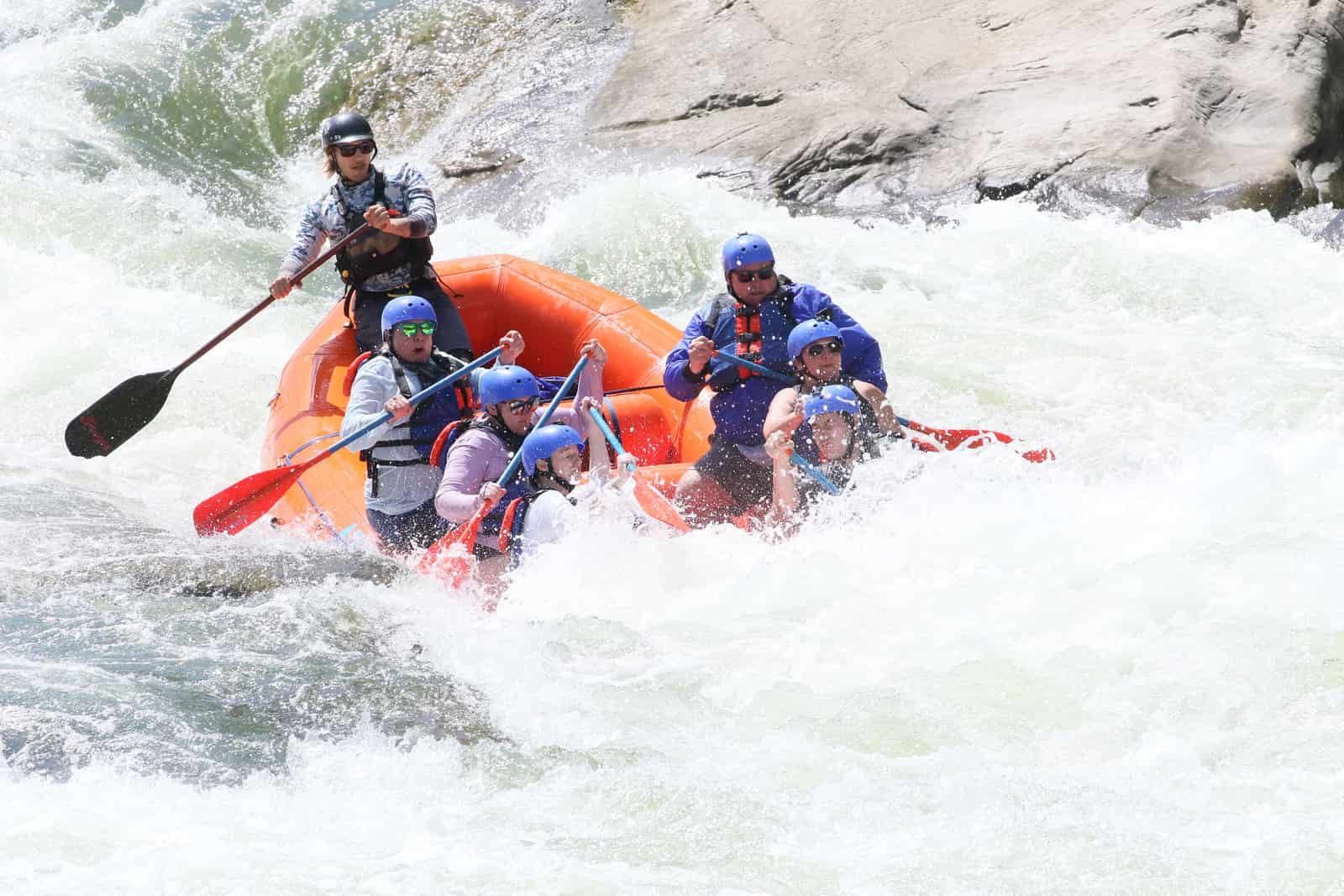
People search for whitewater inflatable kayaks, and there is money in answering that search with a ranked list. We are not going to, and the reason is worth setting out because it explains how the rest of this site works.
None of the eight inflatable kayaks we hold published specifications for is described by its own manufacturer as a whitewater boat. Not one publishes a self-bailing floor, a whitewater class rating, or an outfitting system. They are flatwater and mild-river boats, and their makers say so.
- Zero of the eight kayaks in our registry carries a manufacturer whitewater rating.
- The specifications that would identify a whitewater boat -- self-bailing floor, class rating, thigh straps, higher working pressure -- are absent from all of them.
- Flatwater boats trap water. In moving water a swamped boat is unmanageable, and that is the specific failure a self-bailing floor exists to prevent.
- We would rather publish no ranking than an invented one, particularly for a use case where being wrong has physical consequences.
What separates a whitewater inflatable from these
A self-bailing floor
This is the defining feature and it is binary. A whitewater inflatable has drain holes through the floor so that water shipped in a rapid runs straight back out. A flatwater boat holds it. A hundred liters of water sloshing inside a hull weighs over 200 lb and moves with a half-second delay, which is precisely the worst thing that can happen to your balance in moving water.
Every boat in our registry has a sealed floor. The Sea Eagle SE370 has a manual drain, the Intex Explorer K2 has a cockpit drainage port -- neither of those is self-bailing, and the difference matters.
Working pressure
A whitewater hull needs to hold its shape against a hydraulic pushing on one side of it. That takes pressure. The boats here run 1.1 to 3 psi in the side tubes, which is what makes them light and forgiving on flat water and what makes them fold in moving water.
Outfitting
Thigh straps and a foot brace are what let you steer with your hips rather than only with the paddle. None of these boats has them. Without that connection you are a passenger.
What we would tell you to do instead
Look for boats whose manufacturers state a whitewater class rating explicitly, and read the manual before you buy rather than after. If a page describes a boat as suitable for "mild rivers" or "moving water" without naming a class, treat that as flatwater with marketing on top.
And take instruction. This is one of the few things in paddling where the gear question is genuinely secondary; a properly rated boat with an untrained paddler in it is still a bad idea.
When we can put a whitewater-rated boat in front of you with its manufacturer's own published class rating, self-bailing floor and working pressure, this page will carry a ranked list. Until then it carries this. That rule is the same one applied everywhere here.
- Inflatable kayak versus packraftPackrafts are the category that does address moving water, and they are a genuinely different product.
- How we rankWhy a missing specification produces a blank rather than an estimate.
- All inflatable kayaksThe eight boats we do hold full published specifications for.